

Serial Fiction
Brindlewick's Keeper
by Alexis Rae
Calder Venn didn’t become a player to save a kingdom. He wanted a door that closed. Raised among the Stillfolk, Calder has spent his life outside Brindlewick’s immersive society, where ordinary privacy, better housing, and wider opportunities come with rules his community has good reason to distrust. Registering means accepting oversight, participation requirements, and a life that may pull him farther from the people who chose to stay behind. Then Calder enters Brindlewick and discovers that the world on the other side of immersion isn’t waiting for a hero. It is already full of workers, neighborhoods, arguments, infrastructure, mistakes, and people whose lives continue whether players notice them or not. Calder is good at noticing. When a routine canal irregularity overlaps with a utility failure in the Stillfolk world, two inconveniences become one unanswered question. Calder has no proof that the systems are connected. Yet.
Episodes
Season 1
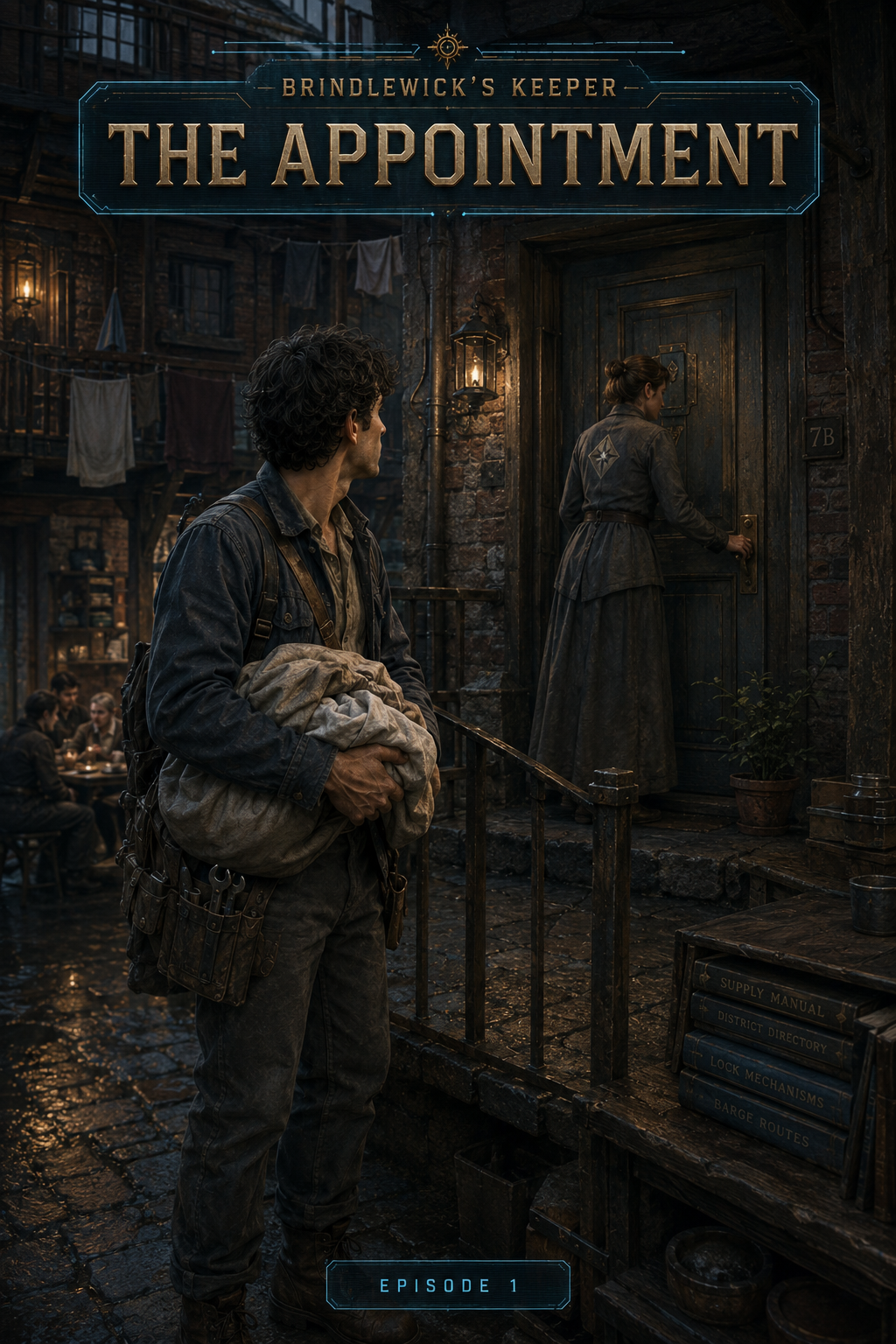
The Appointment Free season
Calder’s life isn’t bad. That’s what makes leaving complicated. He has a home, people he cares about, and no crisis forcing him out of the Stillfolk community. What he doesn’t have is space, privacy, or a door that can shut the rest of the building away. Requesting information about player registration feels harmless until Neria discovers the appointment before Calder tells her. Now Calder has to decide whether wanting something different means rejecting the life that raised him, and whether avoiding that choice would eventually cost them both more.
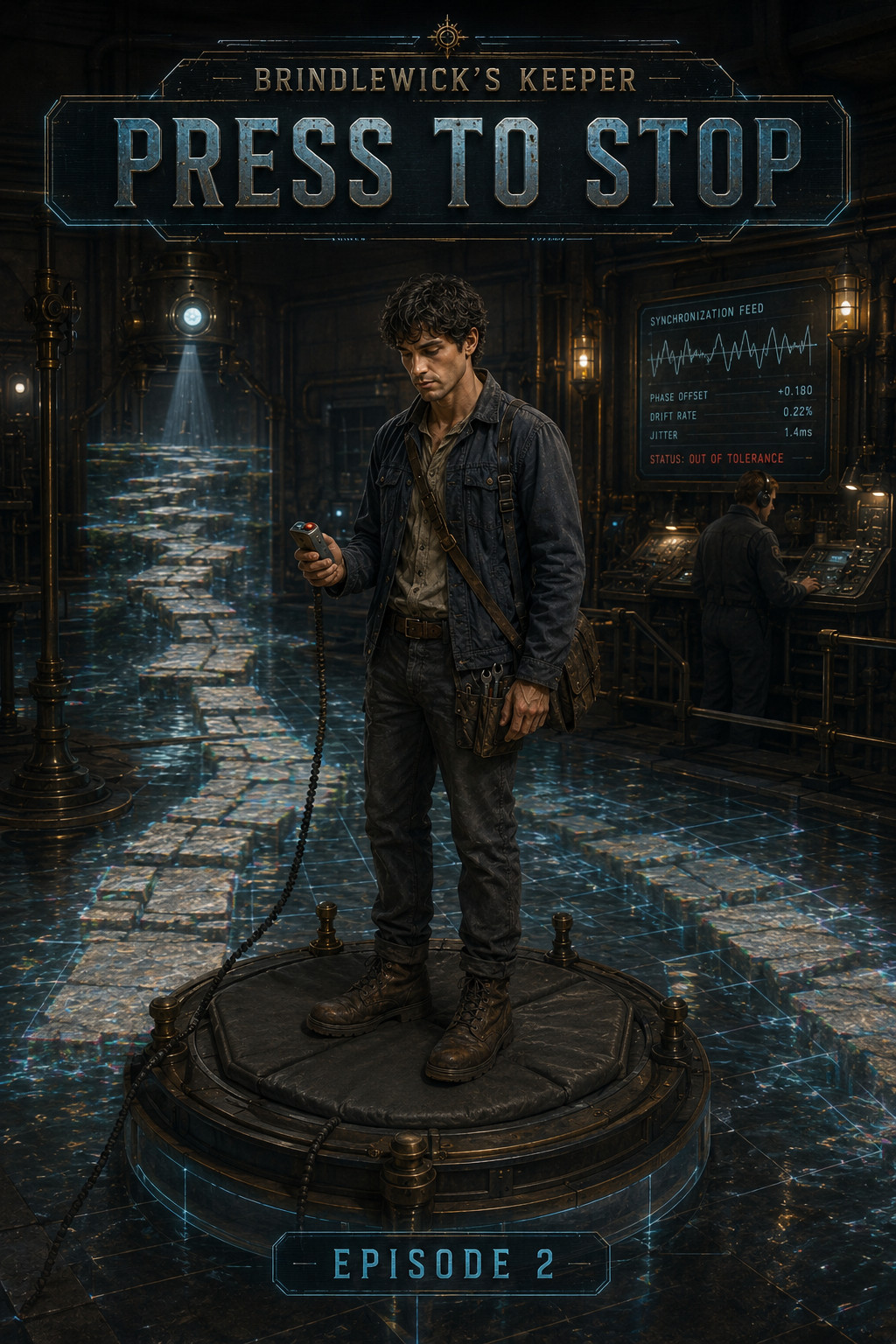
Press to Stop Free season
Calder doesn’t need the immersion system to promise it’s safe. He needs to know what happens when he tells it no. During calibration, he tests the interruption control before the procedure even begins. Then a subtle synchronization error appears beneath his feet, small enough that Calder could probably force himself through it. He doesn’t. The system stops. The fault is measurable. The correction can be tested. For the first time, Calder begins to distinguish between discomfort he should observe and errors he has every right to interrupt.
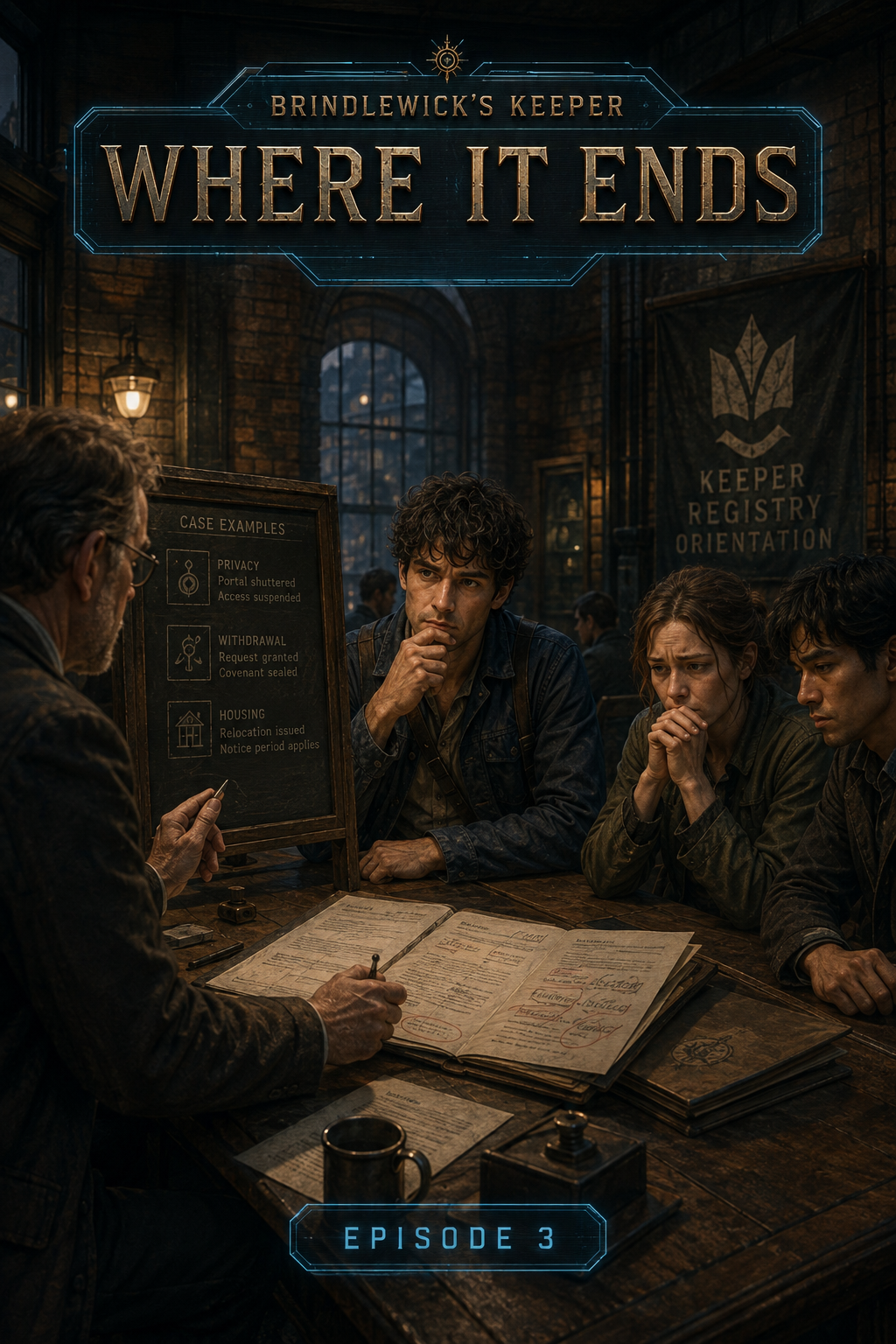
Where It Ends Free season
Privacy. Withdrawal. Housing. Restart. Obligation. The words sounded reassuring in the registration packet until Calder started asking what they actually meant. Civic orientation replaces promises with cases, forcing him to follow every rule to its edge. Protected identity has exceptions. Withdrawal doesn’t erase debts already created. Housing is conditional. Restart changes character state without erasing responsibility. The boundaries are real. So is the fact that another applicant can hear the same answer and reach a completely different conclusion. Eventually, Calder runs out of unanswered questions. What remains is choice.
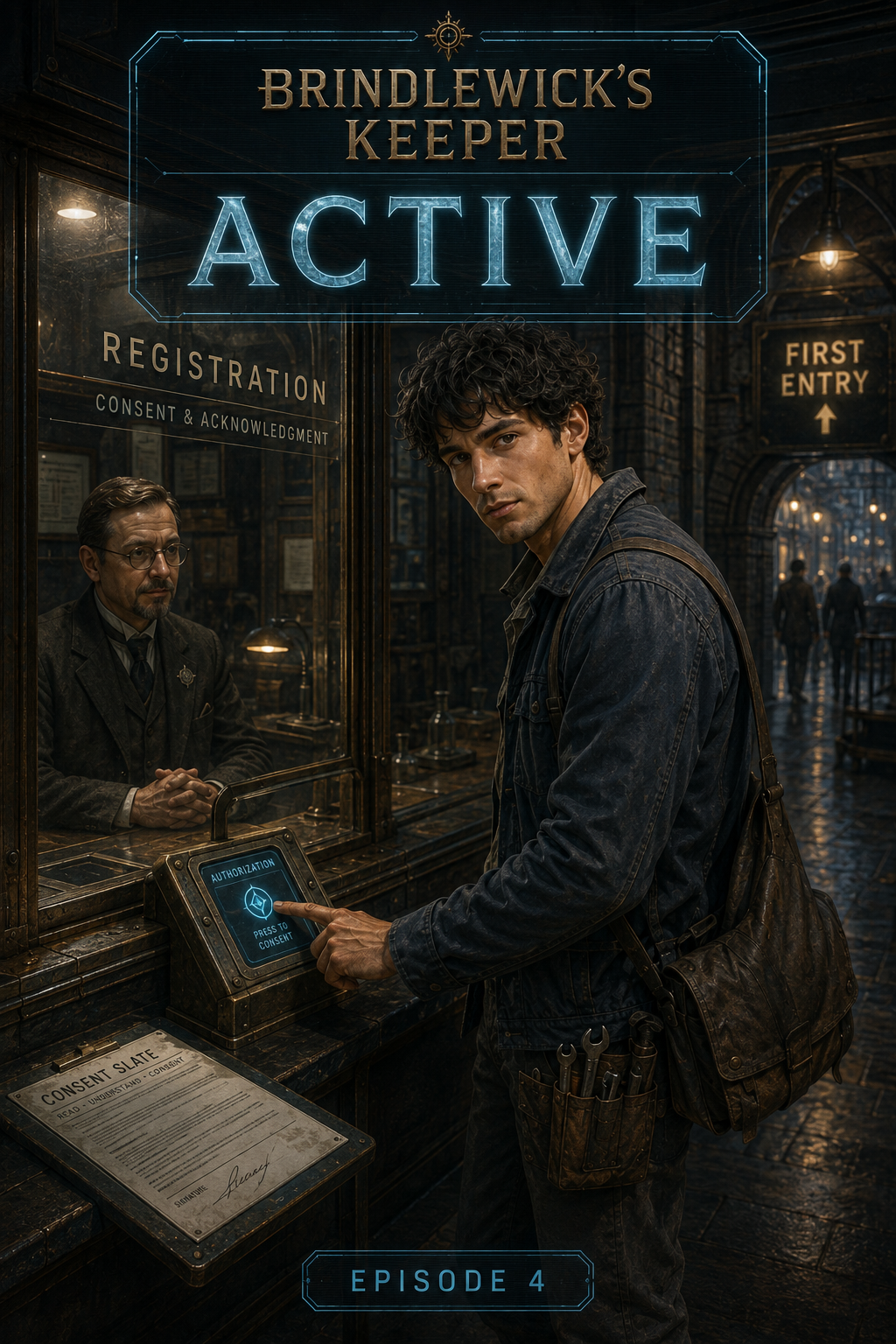
Active Free season
Calder has spent days looking for the hidden condition that will make the decision for him. There isn’t one. The privacy rules hold. The withdrawal terms haven’t changed. Housing and work remain separate choices. Even the exit is still available if Calder wants it. Nothing has failed badly enough to justify walking away. So Calder finally does the one thing research can’t do for him. He chooses. By the time the status beneath his name changes to ACTIVE, Calder is no longer investigating what it means to become a player. He is one.
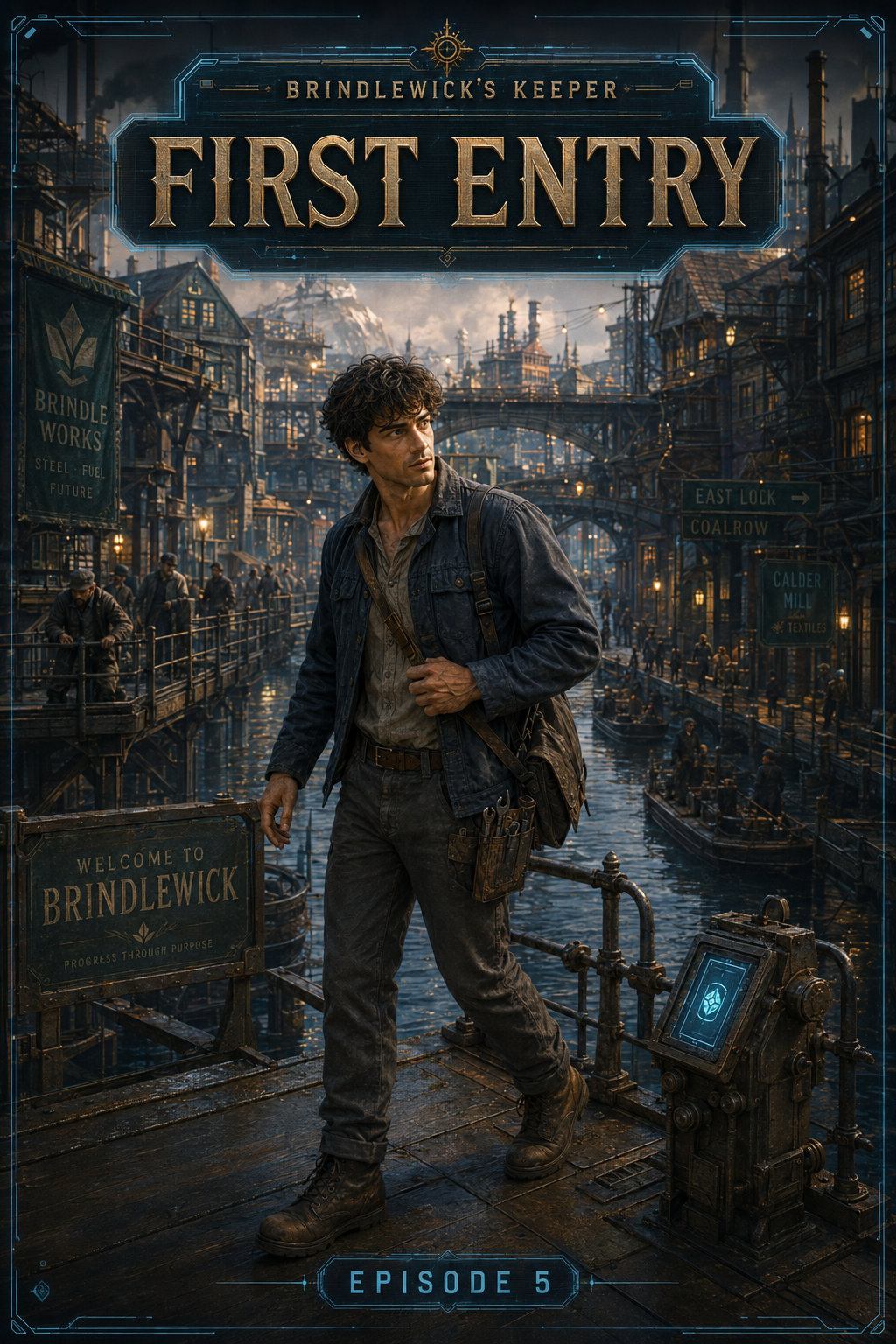
First Entry Free season
Calder’s first moments inside Brindlewick are spent testing everything. Weight. Balance. Motion. Contact. Visual tracking. Every calibration fault he corrected remains gone. Only after his body stops looking for errors does Calder finally look at the city itself. Brindlewick isn’t waiting to impress him. People are working, arguing, carrying deliveries, missing transfers, and moving through streets built for lives already in progress. Calder makes his first navigation mistake almost immediately. He also fixes it. Being new, he discovers, isn’t the same thing as being helpless.
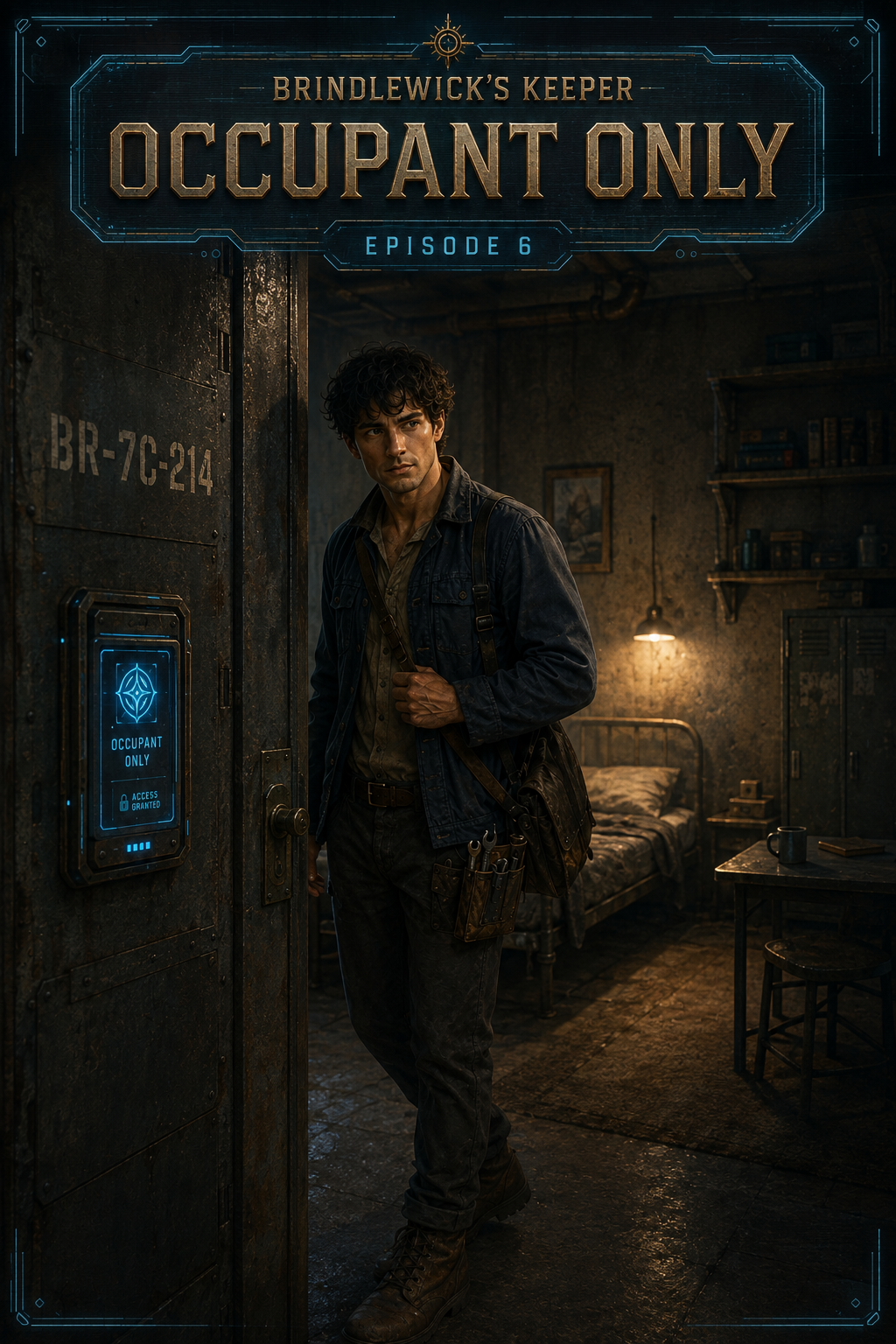
Occupant Only Free season
Calder wanted a door he could close. Now he has one. Before entering his assigned room, he locks it, unlocks it, tests the handle, checks the access record, and proves that the privacy rules he accepted actually survive contact with the real building. Inside, everything is his to arrange. That freedom feels exactly as good as he expected. The empty shelves do not. His manuals are still with Neria. So is the life where returning never required advance notice. Calder finally has a room entirely his own, and discovers that privacy and loneliness can arrive through the same door.
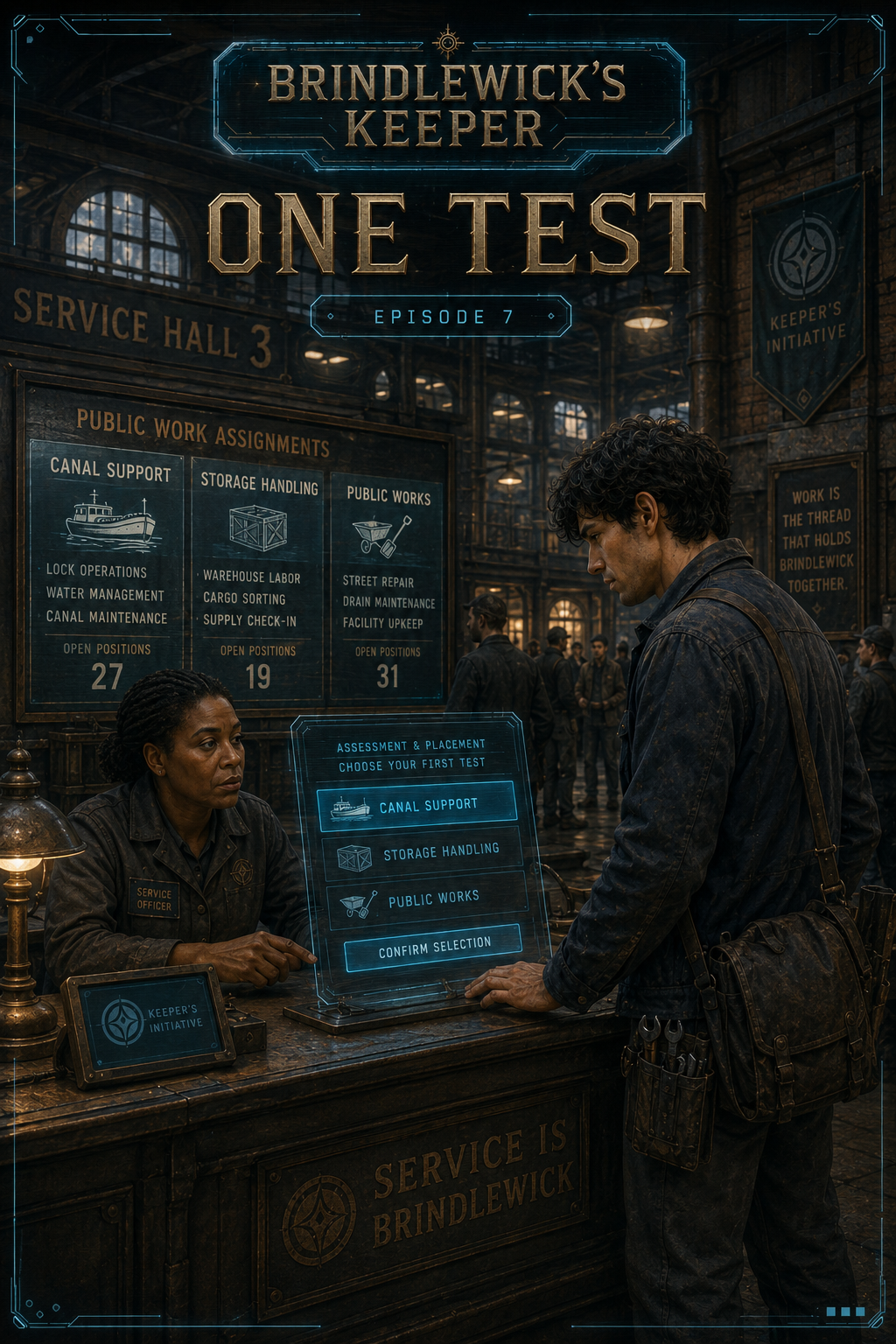
One Test Free season
Brindlewick offers Calder more work paths than he can reasonably compare. So he stops trying. Instead of choosing a career, he chooses one assessment that can tell him something concrete about himself. Canal support requires no prior credential, creates no placement obligation, and will put him somewhere mistakes have visible consequences. That’s enough. Calder reserves the window, leaves the optional preparation material unopened, and goes to bed with something he hasn’t had since registration began. A place where someone expects him tomorrow.
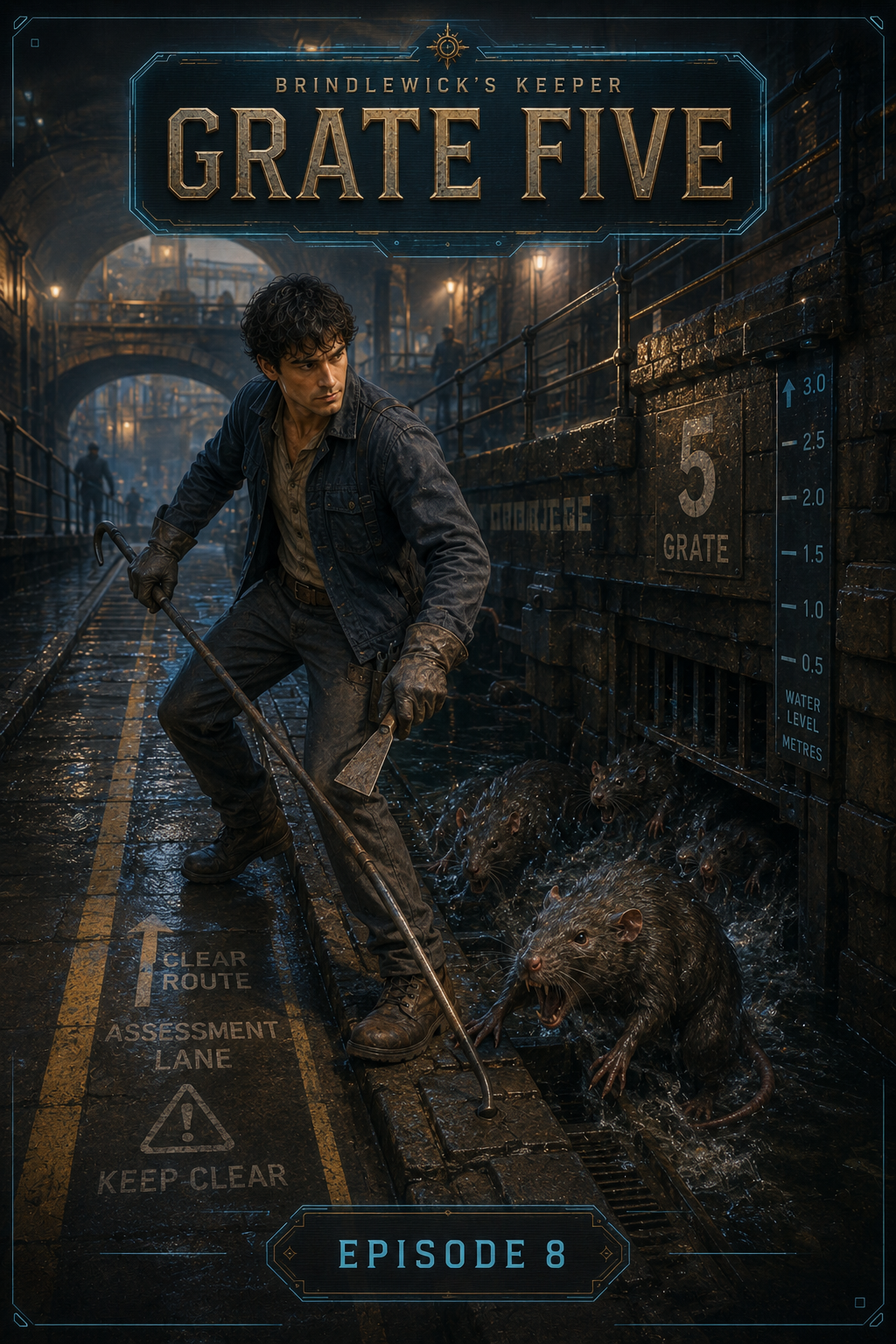
Grate Five Free season
The canal assessment begins with loose leaves, wet stone, and a simple instruction. Stop when resistance begins. Calder follows the rule, learns why it exists, and starts proving he can work without constant correction. Then something hits the underside of grate five. Oversized rats pour into the active lane, workers stop traffic, and the assessment becomes a live containment problem. Calder immediately wants to know what drove them out of the lower channel. The assessor gives him a different responsibility. Keep the route clear. The source may matter more. It still isn’t his job.
Your Problem Free season
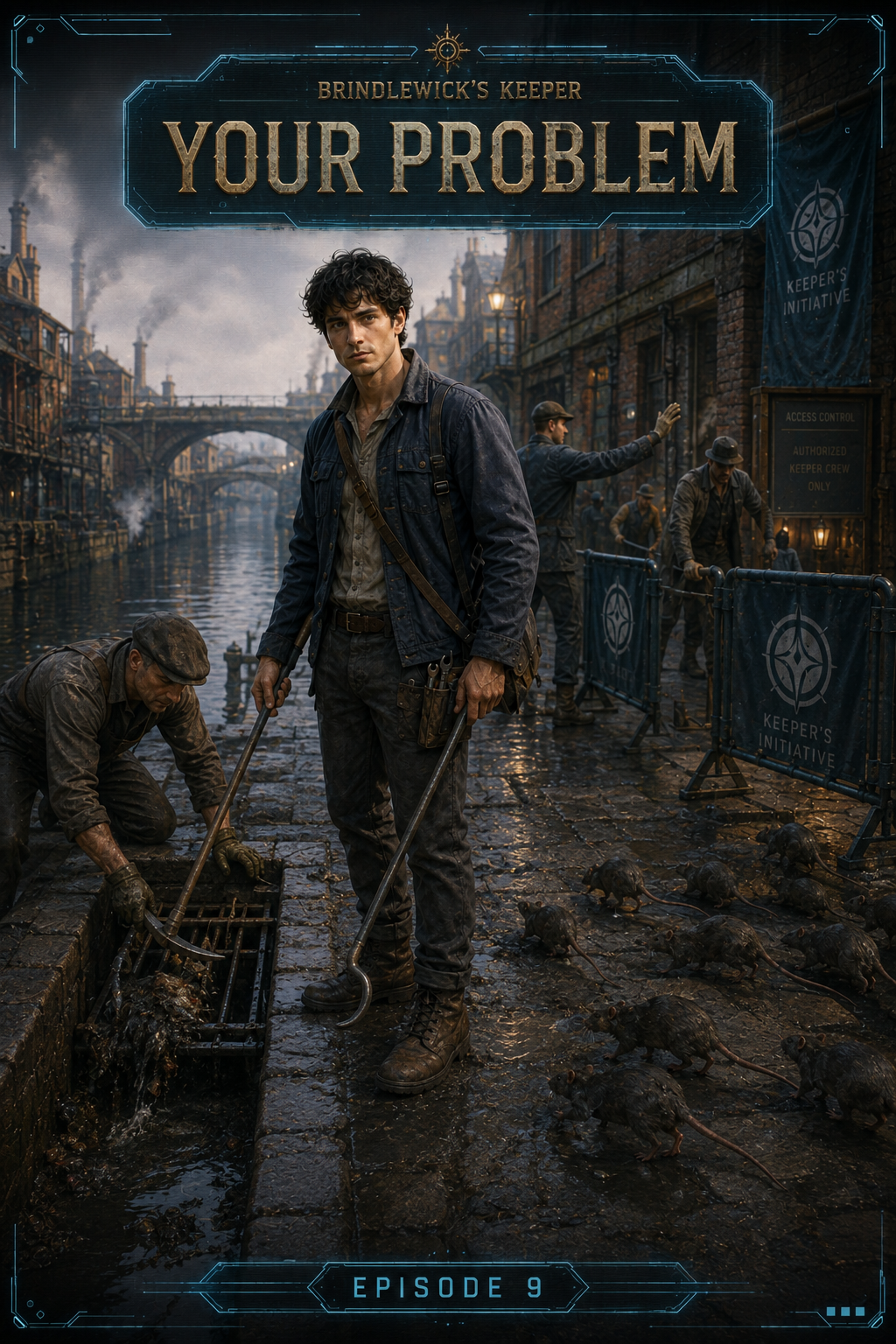
The rat spill isn’t over, and neither is Calder’s assessment. Workers redirect animals toward the drainage edge while a channel crew takes responsibility for whatever is happening below the service wall. Calder’s assignment changes with the hazard, but its boundary remains clear. Contain the route. Protect the worker beside him. Don’t abandon one problem because a more interesting one is nearby. When the assessor finally reviews Calder’s performance, the mistake at grate five stays on the record. So does everything he did after being corrected. Calder passes. The next assignment won’t be an exercise.
Field Task Free season
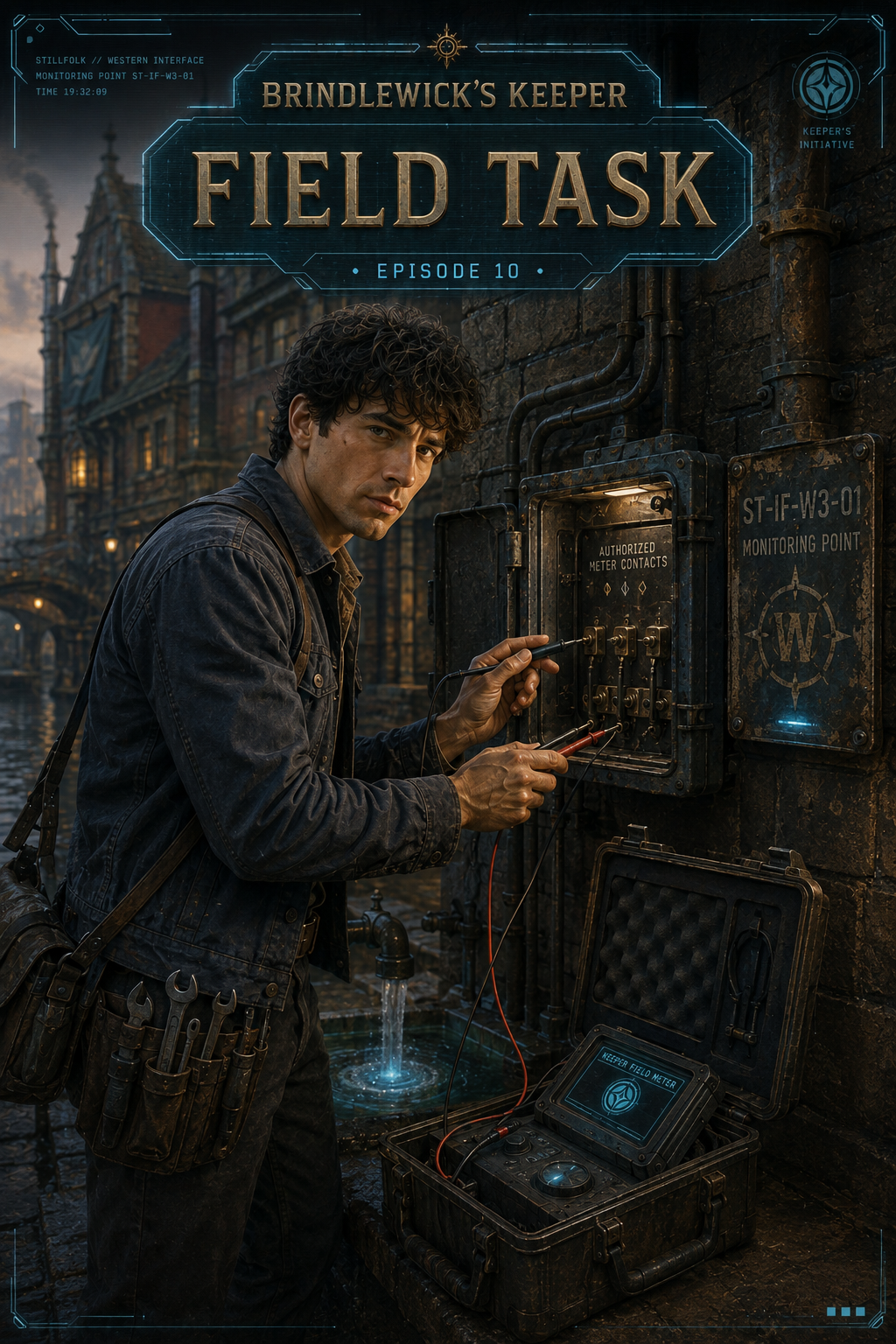
Calder’s first real canal assignment sends him somewhere he already knows. Stillfolk. A utility fluctuation has been flagged along the western district interface, and Calder is assigned three monitoring points with strict limits: collect readings, inspect only authorized access, and report before anyone decides on repair. Then he reaches the district and sees the problem before opening the field case. A shared water fixture pulses unpredictably under a resident’s hand. Calder can record what he sees. He can record what she tells him. He cannot call either one a cause. At the first monitoring point, the meter waits for a reading that may turn a familiar neighborhood into something he has never seen before.